
How leadwork prevents leaks around chimneys and roof joints
A roof leak does not always mean the main tiles, slates or flat roof covering have failed. Very often, water is finding its way in at the points where the roof changes direction, meets a wall, surrounds a chimney or joins another surface.
That is where leadwork matters. Professionally fitted lead flashings and weatherings help guide rainwater away from vulnerable junctions, protecting the structure beneath and reducing the risk of damp, staining and hidden timber damage.
Why roof joints are so vulnerable to leaks
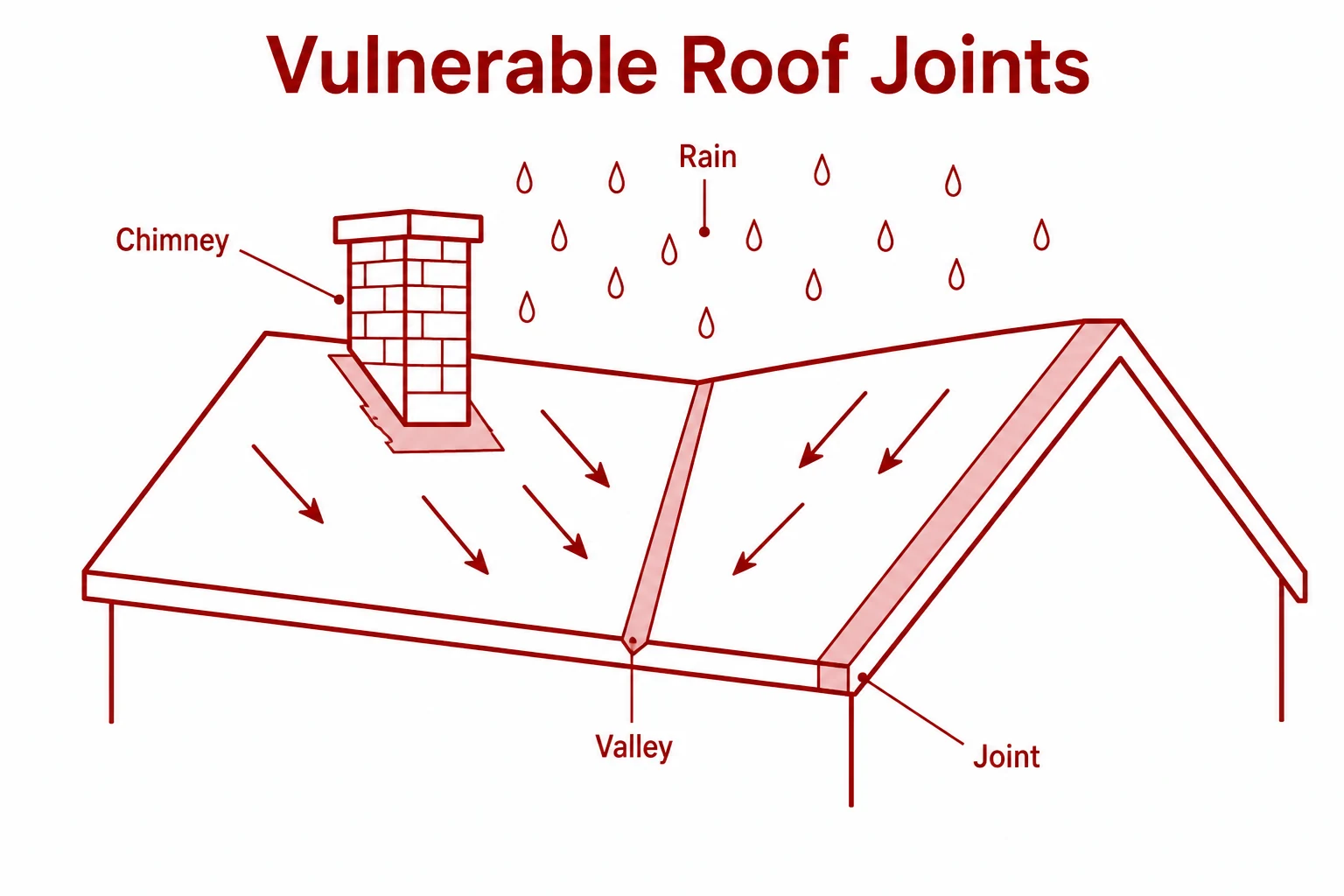
Most roof coverings are designed to shed water across broad, open areas. Tiles, slates and many flat roofing systems perform well when rain can run cleanly down the surface. Problems are more likely where that flow is interrupted.
Chimneys, parapet walls, roof valleys, abutments, dormers, skylights and changes between pitched and flat roof areas all create junctions. At these points, the roof has to deal with movement, changes in angle, wind driven rain and water that may gather briefly before draining away.
The covering itself cannot usually seal these details on its own. A tiled roof, for example, needs carefully formed flashings where it meets a chimney stack. A roof joint beside a wall needs a weatherproof detail that lets water run away rather than soak into the junction. Lead is widely used for this because it is durable, malleable and suited to complex roof shapes when installed correctly.
If the leadwork is split, loose, poorly dressed or incorrectly lapped, rain can track behind it. From inside the property, that can look like a general roof leak, even though the actual weakness is a relatively focused flashing detail.
What leadwork does around a chimney
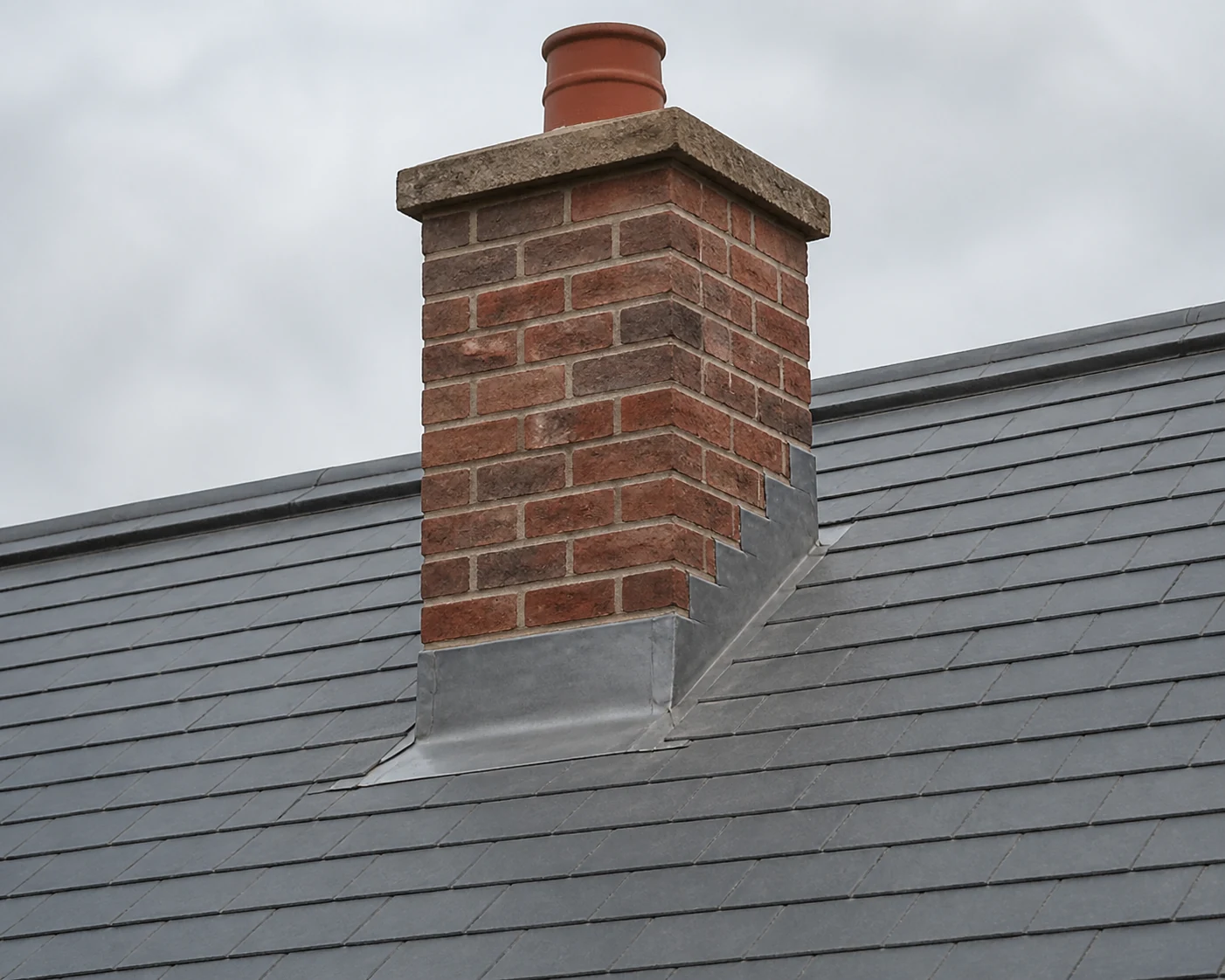
A chimney is one of the most common areas for roof leaks because it passes through the roof covering and creates several exposed edges. Water can hit the uphill side, run down each flank and collect around the lower edge if the detailing is not right.
Leadwork around a chimney normally includes different elements that work together. The front apron helps shed water over the roof covering below. Side flashings protect the edges where the chimney meets the roof slope. Back gutters or soakers may be used to manage water on the higher side, where rain naturally runs towards the stack.
Each part needs to be correctly formed, fixed and tucked into suitable joints. The lead should allow for natural movement as temperatures change. If it is fixed too tightly, laid in pieces that are too large, or forced into an unsuitable shape, it may fatigue over time. Small splits can then appear, and those can let water into the roof structure.
Good chimney leadwork is not just about sealing a gap. It is about creating a route for water to escape. When that route is clear and the details overlap in the right direction, rain is guided away from the vulnerable junction rather than being invited into it.
For homeowners who suspect a flashing issue, 1st Roofing LTD provides specialist lead roofing and leadwork services for roof details such as chimneys, joints and weathered edges.
Signs a leak may be linked to flashings
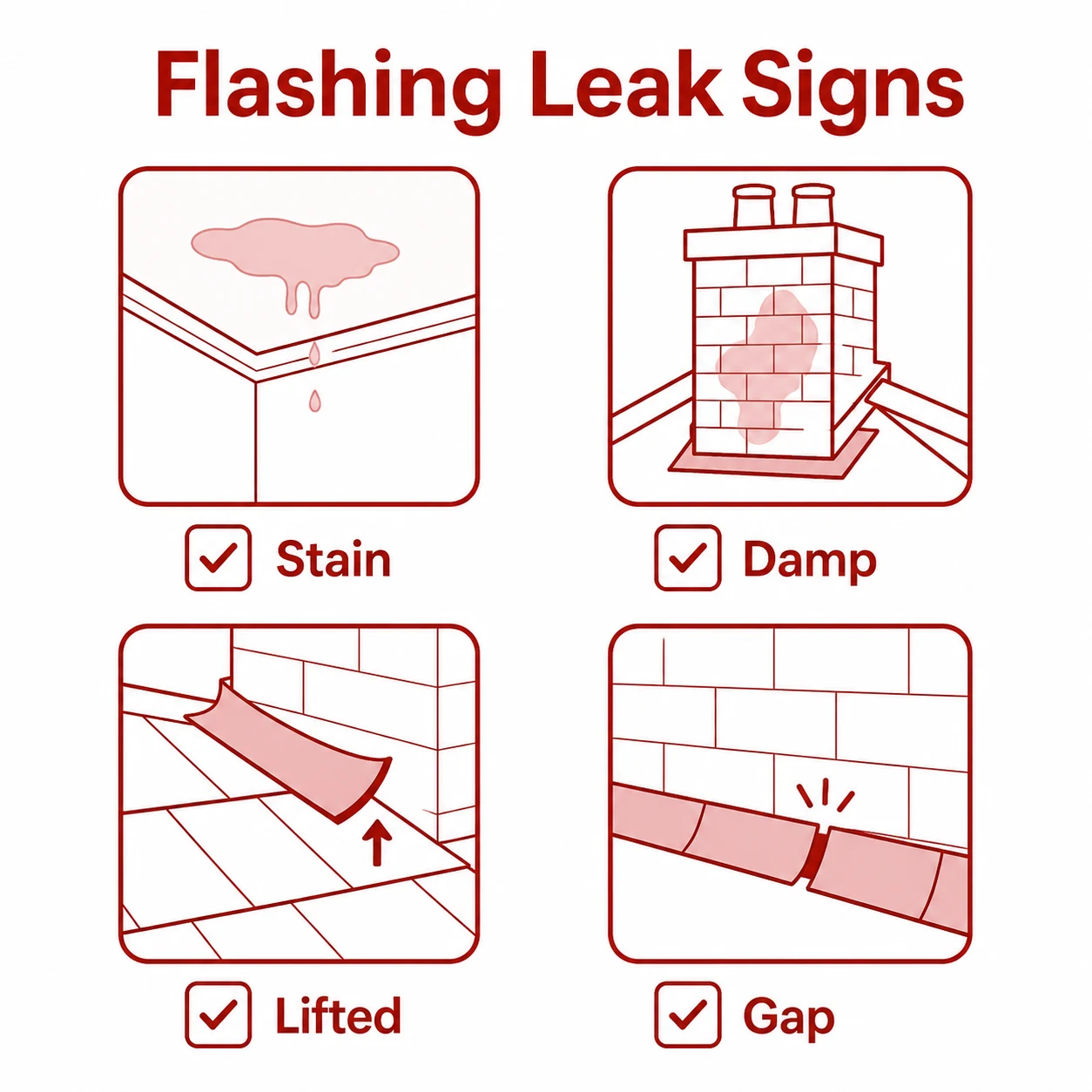
It is easy to assume that a leak means a large section of roof needs attention. Sometimes that is true, but flashing defects can produce very similar symptoms. The clue is often where the damp appears and when it shows up.
Leaks linked to leadwork may be noticed near chimney breasts, upper room ceilings, loft timbers, internal corners, party wall lines or areas below a roof junction. Damp patches might appear after heavy rain, after wind has pushed rain against the roof, or after a prolonged wet spell.
Common warning signs include:
- Water staining on ceilings close to a chimney or wall junction
- Damp patches that return in the same place after rain
- Loose, lifted or visibly cracked lead around a roof detail
- Mortar around flashings that has become loose or weathered
- Debris collecting behind a chimney or in a roof channel
- Staining or damp smells in the loft near a junction
These signs do not prove that leadwork is the only issue, but they are strong reasons to have the area checked. A proper inspection can separate flashing defects from slipped tiles, cracked slates, blocked outlets, gutter problems or issues with the main roof covering.
Regular roof checks can also help identify small faults before they become internal leaks. A planned roof maintenance inspection is often the simplest way to keep vulnerable details under control.
Why professional fitting makes such a difference
Lead is a skilled roofing material. It can be shaped to suit awkward junctions, but that flexibility is only useful when the work follows sound roofing principles. The right thickness, lap, fixing method and allowance for movement all matter.
One common problem with poor leadwork is that it may look sealed at first glance but fail under real weather conditions. Water can travel sideways, rise by capillary action, or be pushed under a detail by wind. A bead of sealant on its own is rarely a reliable answer to a badly formed flashing.
Professional roofers consider how rain behaves on the whole roof, not just the visible gap. They look at the pitch, exposure, surrounding tiles or slates, brickwork condition, existing mortar joints, drainage paths and the way different materials meet. The aim is to create a detail that works with the roof rather than fighting against it.
Correct installation also helps protect the lead itself. Lead expands and contracts with temperature changes. If it is used in unsuitable lengths or restrained incorrectly, stress can build up. Over time, that may cause cracking. Skilled detailing gives the material room to move while still keeping water out.
This is especially important where leadwork connects with tile or slate roofing, because each material has its own way of shedding water. If you are also dealing with ageing coverings, a broader assessment of flat roofing junctions or pitched roof details may be useful.
Maintenance helps leadwork keep protecting the roof
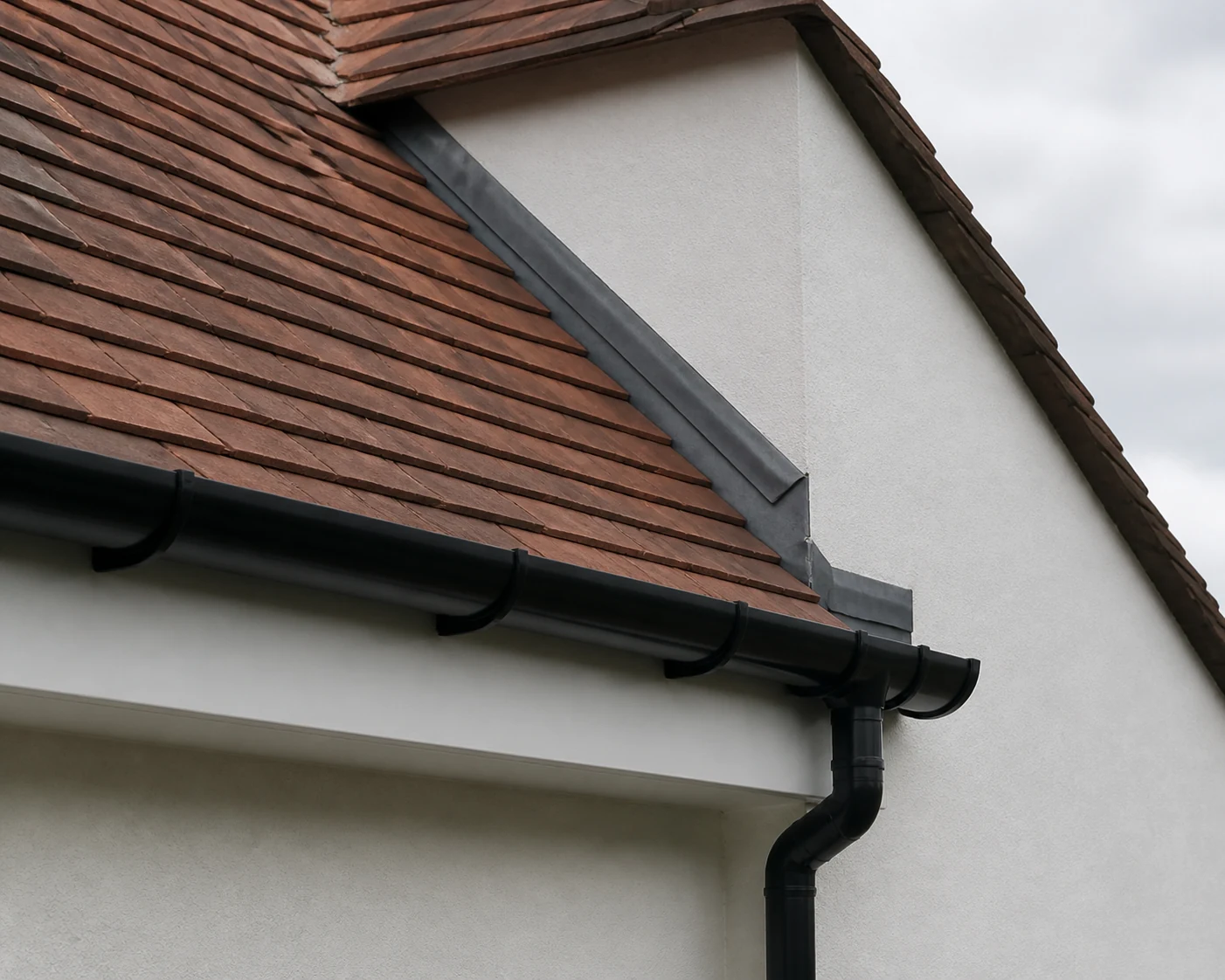
Good leadwork can last well when it is properly installed and looked after. Like all roof details, though, it benefits from periodic checking. Weather, movement, falling debris and changes in surrounding materials can all affect how well a junction performs.
Maintenance is not about unnecessary work. It is about catching small changes early. A lifted edge, blocked channel, cracked mortar joint or loose fixing can often be dealt with before water reaches the inside of the property.
Homeowners should avoid walking on roof areas or disturbing leadwork themselves. Lead can be damaged by careless foot traffic, and roof access carries obvious safety risks. A roofing contractor can inspect the relevant areas properly and advise whether the lead can be repaired, dressed back into place, sealed as part of a suitable detail, or replaced where necessary.
It is also worth remembering that water may enter in one place and appear somewhere else. A damp patch beneath a chimney, for example, could be linked to flashings, porous masonry, a damaged pot, nearby tiles or a guttering problem. That is why a careful diagnosis matters more than guessing.
Drainage should be considered too. If rainwater is not being carried away cleanly, roof junctions can be put under extra pressure. Issues with guttering and rainwater flow may need attention alongside leadwork repairs.
When to ask for help with a suspected leadwork leak
If you notice a recurring damp mark, staining near a chimney breast, water in the loft after rain or visible damage to roof flashings, it is sensible to arrange an inspection. The sooner the source is confirmed, the easier it is to protect the roof structure and interior finishes.
A professional roofer will look for the route water is taking, not just the place where it appears indoors. They may check the condition of the lead, the way it is dressed into masonry, the surrounding roof covering, nearby gutters and any signs of previous patch repairs.
In some cases, a localised repair may be suitable. In others, replacing a section of leadwork gives a cleaner and more reliable result. If the surrounding roof covering has also deteriorated, the best approach may involve repairing both the flashing and the adjacent materials so the whole junction works properly.
Leadwork is a protective detail, but it is also part of the wider roofing system. When it is treated as a specialist element rather than an afterthought, it can make a significant difference to how well a roof resists leaks at its most exposed points.
- Leaks around chimneys and roof joints are often caused by flashing details rather than the main roof covering.
- Leadwork helps guide rainwater away from vulnerable junctions when it is correctly formed, lapped and fixed.
- Warning signs include recurring damp patches, staining near chimney breasts and visible cracks or lifting in the lead.
- Professional inspection is important because water can travel before it appears indoors.
- Maintenance helps catch small leadwork issues before they develop into more serious roof repairs.
Frequently asked questions
Can damaged lead flashing cause a roof leak?
Yes. If lead flashing is cracked, loose, badly lapped or no longer sealed into the surrounding masonry, rainwater can get behind it and enter the roof structure. The leak may appear indoors near a chimney, wall junction or ceiling edge.
Does a leak near a chimney always mean the leadwork has failed?
Not always. Chimney leaks can also be linked to damaged masonry, slipped tiles, cracked slates, blocked drainage paths or other roof defects. Leadwork is a common cause, but a proper inspection is needed to confirm the source.
Can leadwork be repaired, or does it need replacing?
It depends on the condition and the type of defect. Some minor issues can be repaired if the surrounding detail is sound. If the lead is split, badly fitted, stressed or heavily weathered, replacement may give a better and longer lasting result.
How often should roof leadwork be checked?
It is sensible to have vulnerable roof details checked periodically, especially after severe weather or if the property has known damp marks. Regular maintenance can help spot lifted edges, cracked mortar or blocked channels before water gets inside.
Need advice on chimney or roof joint leaks?
If you think a leak may be linked to leadwork, 1st Roofing LTD can inspect the roof detail, explain the cause clearly and recommend the right repair.